
Welcome to The Conservatory.
Where domestic life meets observational storytelling. A place for readers (and listeners) to become immersed in anthropological human emotion, humorous realism and whimsical whispers.

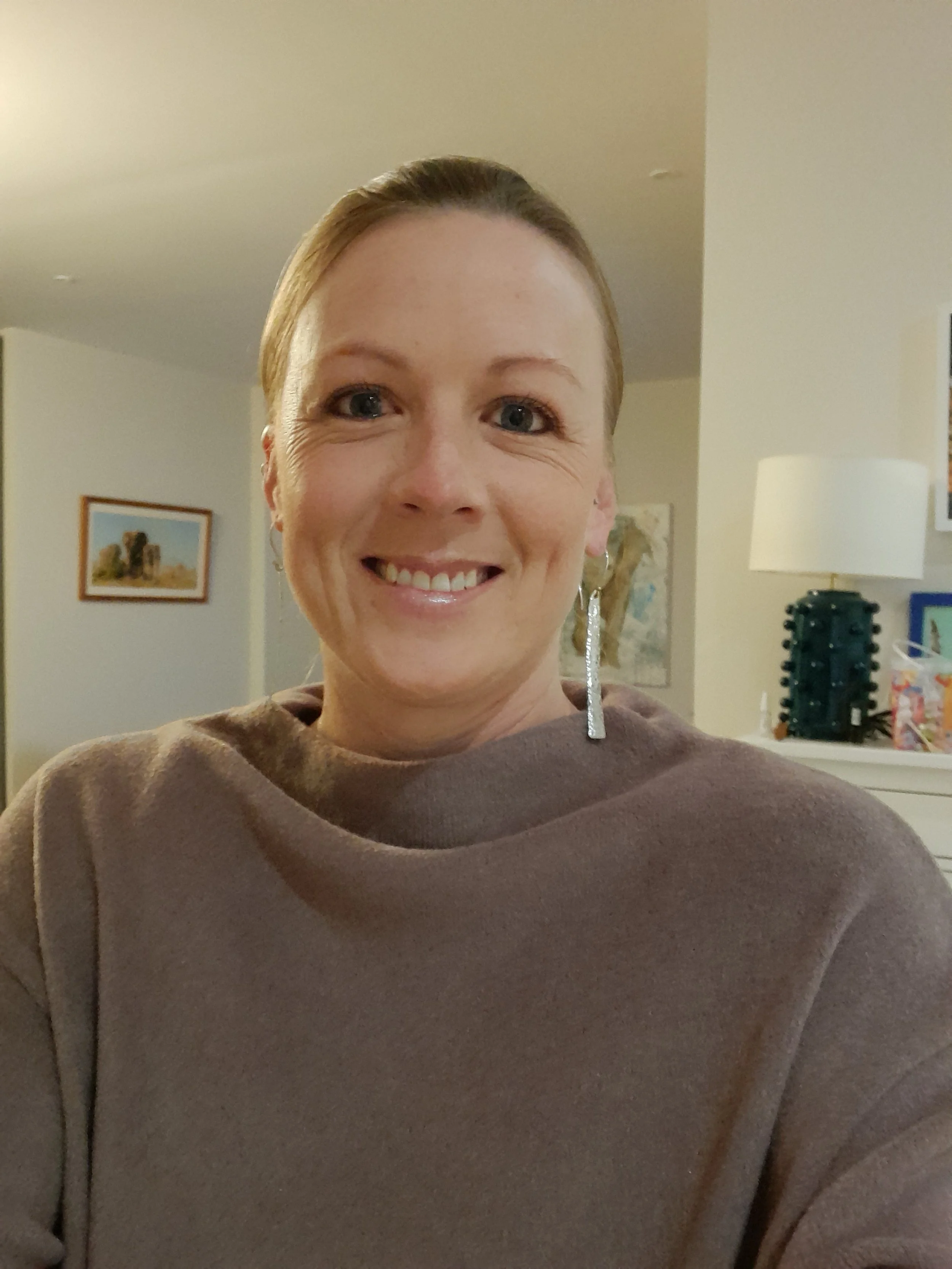
Stephanie is a published author, Podcaster and self-proclaimed
Domestic anthropologist
A transcontinental child of the world, special needs mum, observer of human behaviour and keeper of family histories.
Stephanie currently lives in Dublin with her husband and two children. She grew up in Africa, a place that she deeply loves and which has shaped her life experiences. She shares stories, books and podcasts from her unique point of view and is passionate about giving readers an immersive and intellectual discovery experience.
The Conservatory is her Library, a place where she stores her work and shares it with intrepid explorers. A reflection of her own philosophy and unnerving desire to retain the parts of human history that can only be felt with words.
Featured Observations
-
That’s what the internet keeps telling me anyway.
Go outside. Touch grass. Move your body. Regulate your nervous system. Take a mindful stroll.
So today, in what can only be described as an ambitious wellness initiative, we decided to walk four miles along the canal in Dublin with Oliver in his buggy.
Now. In theory? This sounds lovely.
Fresh air. Family bonding. Nature. Movement. Sunshine.
In reality, however, what actually happened was two exhausted adults slowly dragging themselves across Dublin while Timmy Trumpet blasted from a mobility buggy like we were trying to initiate a tiny canal-side music festival.
Honestly, the contrast was unbelievable.
You had joggers passing us doing deep breathing exercises and mindfulness walks while my son was cruising through the city like a tiny disabled DJ Khaled.
Completely unbothered.
No stress whatsoever.
Because unlike the rest of us, Oliver did not have to physically participate in the walking.
A typical ten-year-old would have complained the entire journey.
“My legs hurt.” “How much further?” “I’m tired.” “Can we stop?” “I’m hungry.”
Meanwhile Oliver was essentially travelling business class through Dublin in his luxury mobility transporter while his sweaty support staff physically deteriorated around him.
At one stage Timmy Trumpet was blaring so loudly down the canal that I became genuinely concerned we were disturbing wildlife several postcodes away.
But honestly? Once you become a parent, especially a special needs parent, your threshold for public embarrassment completely disappears.
At some point survival becomes: “If the music keeps him happy then the entire city shall experience EDM.”
And because apparently I enjoy making poor decisions, I wore my new Vans.
Now millennials will understand this immediately.
Vans are not shoes. Vans are emotional anthropology.
They carry memories.
Every skater boy from 1995 wore Vans. Every emotionally unavailable teenage boy with frosted tips and a chain wallet wore Vans. They smell faintly of: Tony Hawk Pro Skater, burned CDs, and unresolved emotional issues.
So despite being structurally equivalent to walking on decorative cardboard, I wore them anyway because they represent freedom.
Unfortunately my feet are now paying the price for millennial nostalgia.
By mile three I could physically feel layers of my skin negotiating resignation packages.
And still we continued the walk because millennials are incapable of admitting an activity intended to improve our health is actively injuring us.
That’s another thing about modern wellness culture nobody talks about.
Everything designed to “heal” you somehow involves low-level suffering.
Cold plunges. Pilates. Paper straws. Oat milk. Four-mile walks in unsupported canvas footwear.
Nothing can just be relaxing anymore.
Even the canal itself felt emotionally demanding.
Because once you become a parent every outing transforms into: logistics, temperature regulation, snack calculations, and mild crowd management.
Nobody is strolling peacefully. We are operationally relocating children through public infrastructure.
And honestly the funniest part was me.
Because there I was: wearing supermarket sunglasses, blistered feet developing in real time, Timmy Trumpet echoing across Dublin, pushing a delighted tiny king through the canal like part of some travelling electronic music parade.
If somebody had looked at us from a distance they probably would have thought: “What a lovely family outing.”
Meanwhile internally I was approximately eleven minutes away from lying down directly on the canal path and allowing nature to reclaim me.
But despite all of this…
it actually was lovely.
That’s the annoying thing about parenthood.
You can be: overstimulated, sweaty, injured, exhausted, and emotionally hanging on by a thread…
and still somehow recognise: this is a good memory.
Oliver was happy. The weather was beautiful. We were together. Nobody cried. Nobody required emergency snacks. Nobody got pushed into the canal.
By modern family standards that’s basically a luxury holiday.
Although I will say this:
when we got home I was so physically exhausted that Oliver went straight to bed without a shower and I felt absolutely no guilt whatsoever.
None.
Because there’s a very specific level of parenting fatigue where the body simply says: “We are done now.”
No optimisation. No routines. No ideal evening structure.
Just: survival.
And honestly? I think that’s what millennials are slowly realising collectively.
We spent years trying to optimise every aspect of existence: wellness, nutrition, screen time, sustainability, mindfulness, organic food, ergonomic water bottles…
when really sometimes happiness is just: a canal walk, a child laughing in a buggy, terrible footwear choices, and Timmy Trumpet absolutely assaulting the peace of Dublin on a sunny afternoon.
-
Ramses is not technically a dangerous dog.
I want to clarify that immediately for legal reasons and also because he looks like a Victorian orphan who reads poetry beside a lighthouse.
But emotionally?
Ramses operates at a level of psychological intensity that should not be available to domestic animals.
Now when we first got him, the understanding was that he would become:
emotionally supportive,
family friendly,
and perhaps a calming presence within the household.
Which in hindsight was a wildly optimistic interpretation of the situation.
Because unfortunately, Ramses turned out to be what I now refer to as:
The Onion of Deceit.
Everything about him LOOKS trustworthy.
The floppy ears. The sorrowful eyes. The gentle face.
And then somebody enters the apartment and suddenly he transforms into a tiny trench soldier defending Western Europe from invasion.
Honestly, he would have done incredibly well in the trenches.
Hypervigilant. Emotionally committed to the unit. Prepared to launch himself into conflict with absolutely no regard for his own wellbeing.
The Amazon driver never stood a chance.
Now to be fair to Ramses, I do think life feels genuinely overwhelming for him.
This dog experiences existence at maximum emotional volume.
A leaf moves outside? National emergency.
Someone closes a door? Emotional betrayal.
The co-custodian leaves the apartment? Complete psychological collapse.
Which is probably why, for a dog that is supposedly emotionally supportive, Ramses is currently on a surprising amount of anxiety medication.
And honestly? Fair enough.
Because at one point the situation escalated so dramatically that we actually sent him to an eight-week residential dog psychology board and train programme.
At a cost of nearly four thousand euros.
Four thousand.
I don’t even know why I’m laughing because objectively that is not funny.
That is the cost of an international holiday.
But instead of travelling abroad, we sent our spaniel to what was essentially a very expensive emotional rehabilitation retreat.
Some people send their children to summer camp.
We sent Ramses for psychological intervention.
Now somewhere during this process I vaguely remember the trainer mentioning possible neurological cognition difficulties, at which point I mentally exited the conversation immediately because I simply did not have the emotional capacity for another neurological profile in this household.
There are already enough neurodivergent people in this apartment.
I cannot begin emotionally accommodating a spaniel with complex processing needs as well.
So for psychological survival reasons, I chose denial.
And honestly? We’re all happier there.
The truly confusing part is that despite all of this… I love him deeply.
Unfortunately.
Because underneath the trench warfare instincts and behavioural instability, Ramses is also:
loyal,
affectionate,
emotionally devoted,
and weirdly sensitive.
Sometimes he’ll quietly place his paw on Oliver’s leg and look at him with this enormous emotional sincerity like he personally understands suffering.
And suddenly you remember: oh no…
This isn’t an evil creature.
It’s just a psychologically overwhelmed spaniel trying his absolute best not to fight the postman.
-
There is a very specific type of optimism that exists inside people who buy money trees.
Because logically, as a 39-year-old adult woman with online banking, direct debits and a mild understanding of economics, I am fully aware that a small tropical plant from a garden centre cannot physically generate financial income.
And yet.
The second I saw it, some deeply ancient part of my nervous system whispered:
“Well… it certainly can’t hurt.”
That is how vulnerable the modern adult becomes under financial pressure. You start accidentally drifting into botanical superstition.
Now, in fairness, the money tree looked incredibly convincing in the shop. Strong trunk. Glossy leaves. Standing there radiating confidence like it had a pension plan and two rental properties.
And the label — “Money Tree.”
Very direct branding.
Not “Decorative Indoor Plant.”
Not “Tropical Leaf Arrangement.”
No.
Money. Tree.
You cannot call something a money tree and then expect financially unstable women not to project wildly onto it.
So I brought it home with genuine enthusiasm. Positioned it carefully in the kitchen where it could absorb natural light and, ideally, passive income. I watered it. I admired it. I looked at it several times a day like:
“Well? Any developments?”
Nothing.
In fact, the more my bank account deteriorated, the more the plant itself appeared emotionally affected by the situation.
The leaves started drooping slightly.
Not dramatically.
Just enough to communicate:
“I, too, have seen the electricity bill.”
And now we exist together in quiet economic despair.
The money tree on the counter.
Me beside it eating discount yoghurt while googling “how long can you survive on leftover fajita mix.”
What’s interesting though is how quickly humans create symbolic meaning around objects when life feels uncertain.
Because the truth is, I didn’t really buy a plant.
I bought optimism.
A tiny domestic symbol that maybe things could improve.
That maybe abundance could enter the house.
That maybe life wouldn’t always feel like calculating whether you can justify branded cheese this week.
And honestly? I think loads of us do this in different ways.
Some people buy crystals.
Some people journal manifestations.
Some people sage the house.
And some of us stand in IKEA holding a braided tree thinking:
“This feels financially responsible somehow.”
Meanwhile the actual reality is that my money tree is currently sitting beside:
unopened post,
reusable shopping bags,
a disabled buggy charger,
and a child requesting Robux with the persistence of a telecommunications scammer.
The environment is not exactly Wall Street.
But weirdly… I still love the stupid little tree.
Because despite everything, it represents hope.
And lately I’ve realised hope itself is actually a form of survival.
Not delusional hope.
Not “I’m going to become a millionaire through photosynthesis” hope.
Just:
“Maybe things are moving in the right direction.”
Which is ironic timing really, because this same week:
my writing got accepted by a national publication,
my website suddenly matters,
and my career path appears to be transforming entirely through a sequence of giraffes, podcasts and emotional collapse.
So perhaps the money tree is working.
Just very slowly.
Like the Irish public sector.